
Tree Protection Plans Penrith
AQF Level 5 Consulting Arborists, Tree Protection Zones and Development Compliance
Need a Tree Protection Plan for your development in Penrith?
Penrith Tree Permit Services prepares Council-ready Tree Protection Plans (TPPs) for residential, commercial, industrial and infrastructure developments throughout the Penrith Local Government Area.
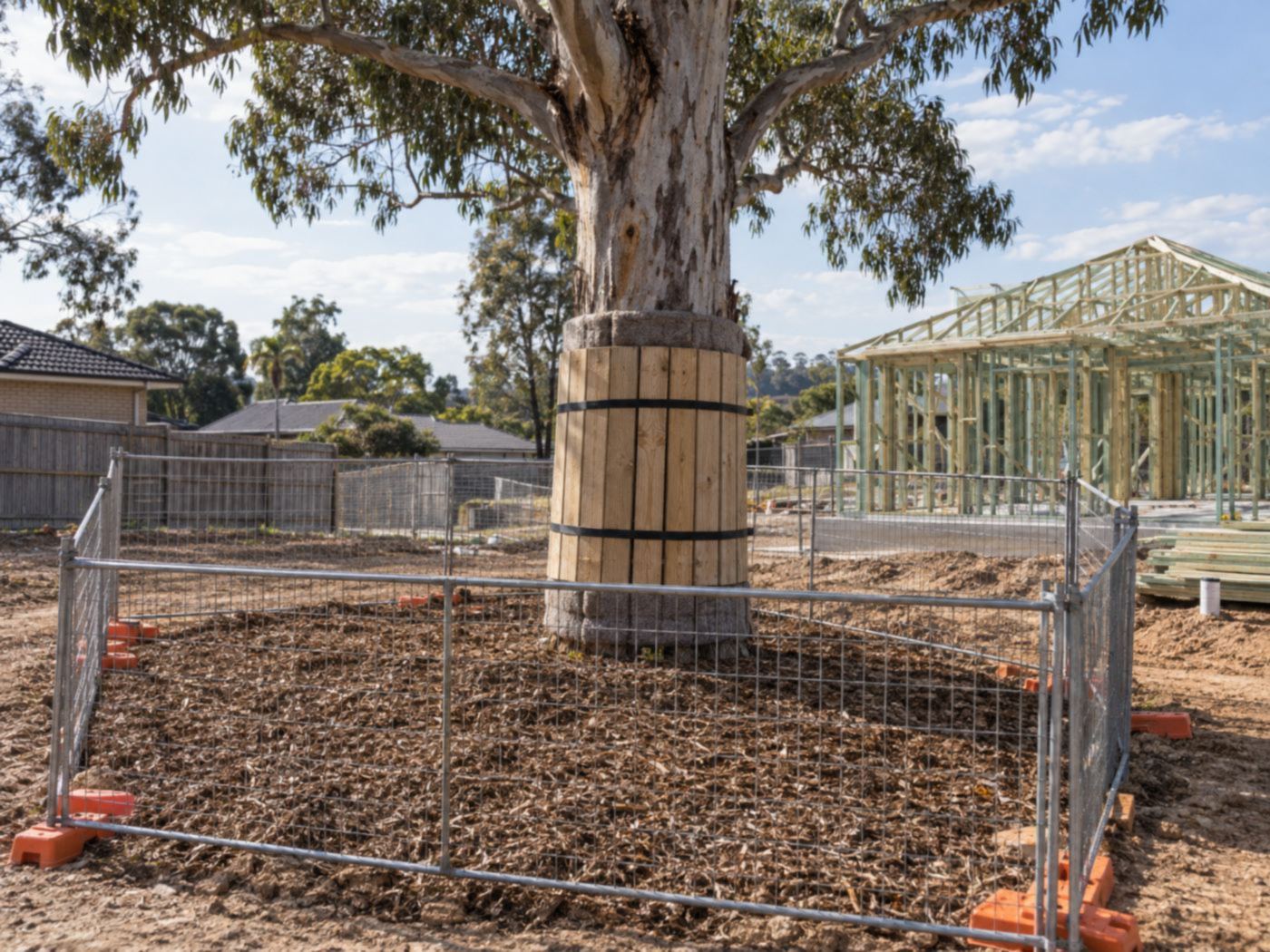
A Tree Protection Plan identifies how retained trees will be protected before and during construction, covering Tree Protection Zones, Structural Root Zones, protection fencing, access restrictions, excavation controls and other measures needed to minimise construction impacts.
Wherever practicable, the same AQF Level 5 Consulting Arborist who prepares the Arboricultural Impact Assessment also prepares the Tree Protection Plan and continues as the Project Arborist during construction, providing continuity from planning through to completion.
Assess RequirementsDefine ProtectionPrepare TPPEstablish ProtectionMonitor Compliance
AQF Level 5 Consulting Arborists32+ Years’ ExperienceDevelopment Compliance Specialists
What Is a Tree Protection Plan?
A Tree Protection Plan is an arboricultural document that explains how retained trees are to be protected during development and construction.
Depending on the project, it can identify:
- Trees to be retained, Tree Protection Zones and Structural Root Zones
- Tree protection fencing, signage and approved access areas
- Machinery exclusion areas and material storage restrictions
- Excavation controls and service installation methods
- Root protection measures, arboricultural supervision and monitoring requirements
Each Tree Protection Plan is prepared specifically for the proposed development rather than using a generic template.
Penrith City Council’s adopted Development Control Plan references AS 4970-2009, Protection of Trees on Development Sites, in relation to tree protection during development. Arboricultural documentation should also have regard to the current applicable Australian Standard together with Council requirements and the approved development documentation.
Does My Development Need a Tree Protection Plan?
Not every Penrith development requires a standalone Tree Protection Plan.
A TPP may be appropriate or required where retained trees could be affected by demolition, excavation or construction, particularly where works occur within or near Tree Protection Zones.
The requirement can arise through:
- Arboricultural Impact Assessment recommendations
- Development Application documentation or Development Consent conditions
- Retention of trees close to proposed construction, excavation or services
- Construction access through or near protected areas
- A requirement for specific tree-protection measures or Project Arborist supervision
The correct starting point is to review the proposed development, arboricultural documentation and Development Consent where already issued, rather than assuming the requirement.
What Is the Difference Between an AIA and a Tree Protection Plan?
An AIA assesses the potential impact of development on trees. A Tree Protection Plan establishes how retained trees will be protected during the works.
An Arboricultural Impact Assessment (AIA) assesses how a proposed development may affect existing trees, covering tree condition, retention value, Tree Protection Zones, Structural Root Zones, development impacts and whether design changes should be considered.
A Tree Protection Plan (TPP) focuses on how trees being retained will be protected before and during construction.
A Tree Protection Plan may follow the recommendations of an AIA or form part of the approved development documentation.
AIA
What impact could the development have on the trees?
TPP
How will the retained trees be protected during the works?
What Does Penrith Council Require During Construction?
Penrith City Council’s Development Control Plan Part C2, Vegetation Management, sets out requirements for protecting retained trees during construction.
Where retained-tree protection measures or a Tree Protection Plan form part of the development approval:
- An adequate fence or similar structure must be constructed around trees or other vegetation to be retained, in accordance with the approved Tree Protection Plan
- Tree Protection Zones identified by an approved TPP must not be used by vehicles or machinery, for stockpiling waste, or for storing building materials
- Construction activity within protected areas must be managed to avoid damage
These controls help protect retained trees from impacts such as soil compaction and contamination, root damage, trunk and limb damage and changes in surface levels.
The actual requirements for an individual project remain determined by the Development Consent and approved development documentation.
Council information last verified: 30 August 2026. Council requirements can change. This page provides general guidance current as of the date above. For a determination specific to your property, confirm current requirements with Penrith City Council or arrange a site assessment.
Protecting Tree Protection Zones and Roots
Tree protection involves more than installing fencing.
Construction activities capable of affecting retained trees can include excavation, trenching, vehicle and machinery movement, material storage, temporary site compounds, changes to ground levels, concrete washout, service installation, root pruning and construction access.
Once damage has occurred, some impacts cannot simply be reversed by installing fencing afterwards. That is why tree protection is most effective when the required controls are identified and established before this activity begins, giving the builder and project team a clear understanding of the required controls before relevant works start.
Where proposed works may affect critical parts of a retained tree’s root system, including areas associated with the Structural Root Zone, further arboricultural assessment may be necessary.
Depending on the tree, site and proposed works, the appropriate response may include root investigation, design modification, alternative excavation methods, changes to service locations, additional tree protection or Project Arborist supervision, determined for the individual site having regard to AS 4970, the approved arboricultural documentation and applicable Development Consent requirements.
Our Tree Protection Plan Process
Review the development
We review the proposed development, Arboricultural Impact Assessment where available, relevant plans and Development Consent where already issued, establishing the trees being retained and the protection requirements that need to be addressed.
Define tree protection
Tree Protection Zones, Structural Root Zones and relevant construction constraints are considered against the proposed works, identifying potential conflicts involving excavation, access, services, machinery or construction activity.
Prepare the Tree Protection Plan
The TPP documents the tree-protection measures appropriate to the project, including fencing, signage, exclusion areas, access controls, excavation requirements, root protection and arboricultural supervision, depending on the development.
Establish protection before construction
Required tree-protection measures should be established at the appropriate stage before potentially damaging demolition, excavation or construction activity occurs.
Monitor where required
Where Development Consent requires ongoing arboricultural supervision, the Project Arborist can inspect and monitor the approved protection measures during construction.
Compliance documentation
Where required, Project Arborist inspections and arboricultural compliance documentation can demonstrate how applicable tree-protection requirements were managed during construction.
Development Projects We Support
Residential Development
New homes, knockdown rebuilds, duplexes, multi-dwelling developments and subdivisions where retained trees require protection during construction.
Commercial & Industrial Development
Commercial buildings, warehouses, industrial facilities and mixed-use developments involving retained trees, construction impacts or arboricultural consent conditions.
Community & Infrastructure Projects
Schools, childcare centres, community facilities, road upgrades and infrastructure projects requiring documented tree-protection measures during construction.
Rural & Growth-Area Development
Larger development sites, subdivisions and growth-area projects where retained trees require documented protection from excavation, access, services, machinery and construction activity.
Tree Protection Plans Throughout the Penrith LGA
AQF Level 5 Tree Protection Plans are prepared throughout Penrith’s North, South and East Wards for residential, commercial, industrial, infrastructure, rural and growth-area developments.
Tree-protection requirements can involve retained and neighbouring trees close to construction, excavation, services and access, together with protection from machinery, material storage and other construction activity.
Relevant Penrith Tree Protection Plan Case Studies
Real development projects provide useful examples of how Tree Protection Plans are applied before and during construction.
Our Penrith Tree Protection Plan case studies cover relevant matters such as:
- Tree protection for new dwelling construction and TPZ fencing before demolition
- Protection of neighbouring trees and construction access near retained trees
- Excavation within or near Tree Protection Zones and underground service installation
- Root protection on commercial and industrial sites
- Changes to protection measures during construction
- Project Arborist inspections and Development Consent compliance
Why Choose Penrith Tree Permit Services?
AQF Level 5 Consulting Arborists
Professional Tree Protection Plans and development arboricultural advice.
Protect Before Construction
Tree-protection requirements are identified and documented before potentially damaging construction activity occurs.
Site-Specific Plans
Each Tree Protection Plan is prepared for the actual trees, development and construction requirements rather than using a generic template.
Continuity Through Construction
Wherever practicable, the same arborist who prepares the AIA prepares the Tree Protection Plan and continues as Project Arborist.
32+ Years’ Arboricultural Experience
Practical experience across development assessment, tree protection, construction impacts and arboricultural compliance.
Council-Ready Documentation
Clear arboricultural documentation prepared for use by project teams and where required as part of the development and compliance process.
Related Development Arboricultural Services
Development Arborist Reports & AIAs
AQF Level 5 assessment of trees affected by proposed development, including retention value, TPZ, SRZ and development impacts.
Development Arborist Reports PenrithTree Root Investigation & Mapping
Non-destructive investigation where actual root location, size or depth needs to be established to inform development or construction decisions.
Tree Root Investigation & Mapping PenrithProject Arborist Services
Construction-stage tree protection, inspections, excavation monitoring and arboricultural compliance reporting.
Project Arborist Services PenrithDevelopment Tree Compliance Guide
Detailed guidance on Penrith development tree requirements, protection and construction-stage compliance.
Penrith Development Tree Compliance GuideFrequently Asked Questions
How retained trees are protected during construction, and what Council requires.
What is the difference between a Tree Protection Plan and an Arboricultural Impact Assessment?
An AIA assesses potential impact; a TPP documents how trees will be protected.
An Arboricultural Impact Assessment (AIA) evaluates the potential impact of a proposed development on trees, while a Tree Protection Plan documents how retained trees are to be protected before and during construction.
Who prepares a Tree Protection Plan?
Our Tree Protection Plans are prepared by AQF Level 5 Consulting Arborists.
Each plan is prepared specifically for the trees, proposed development and applicable project requirements.
Does a Tree Protection Plan include Tree Protection Zones?
Yes.
Tree Protection Plans can identify Tree Protection Zones, Structural Root Zones, protection fencing and other construction controls required for retained trees.
Can work happen within a tree’s Structural Root Zone?
It depends on the tree, proposed works and applicable development requirements.
Work affecting critical root areas may require further arboricultural assessment, root investigation, design modification or Project Arborist supervision, determined for the individual site having regard to AS 4970 and the applicable Development Consent requirements.
Can a Tree Protection Plan change during construction?
Yes, where construction methods, design or site conditions change.
The tree-protection requirements may need to be reviewed. Any change needs to maintain appropriate protection of retained trees and remain consistent with the applicable development approval requirements.
Do you provide construction monitoring?
Yes.
Where Project Arborist monitoring is required, we can provide construction-stage tree-protection inspections, excavation monitoring and arboricultural compliance reporting.
How long does a Tree Protection Plan take to prepare?
Timeframes vary.
They depend on project complexity, site conditions, the number of retained trees and the information available.
Need a Tree Protection Plan in Penrith?
If your Development Application, Arboricultural Impact Assessment or Development Consent requires retained trees to be protected during construction, we can review the documentation and establish the appropriate Tree Protection Plan requirements.
Send us the relevant plans, Arborist Report or AIA, Development Consent where available and any Council correspondence.
AQF Level 5 Consulting ArboristsTree Protection Plans32+ Years’ Experience