
Development Arborist Reports Penrith
AQF Level 5 Arborists for Development Applications, Arboricultural Impact Assessments and Construction Compliance
Planning a Development Application in Penrith?
Penrith Tree Permit Services prepares Council-ready Development Arborist Reports and Arboricultural Impact Assessments (AIAs) for residential, commercial, industrial and infrastructure developments throughout the Penrith Local Government Area.
Where proposed works may affect existing trees, Penrith City Council may require arboricultural information addressing tree condition, retention value, Tree Protection Zones, Structural Root Zones, development impacts and tree protection measures, assessed under Penrith’s Development Control Plan (Part C2, Vegetation Management).
Our AQF Level 5 Consulting Arborists work with homeowners, architects, builders, developers, engineers, town planners and Principal Certifiers from early design through Development Application assessment and construction compliance.
Already have plans or a Council request? Send them to us and we will identify the arboricultural assessment required and provide a clear quote before you proceed.
Request a free quoteLocal AQF Level 5 Consulting Arborists32+ Years’ ExperienceCouncil-Ready ReportsFast-Track Available
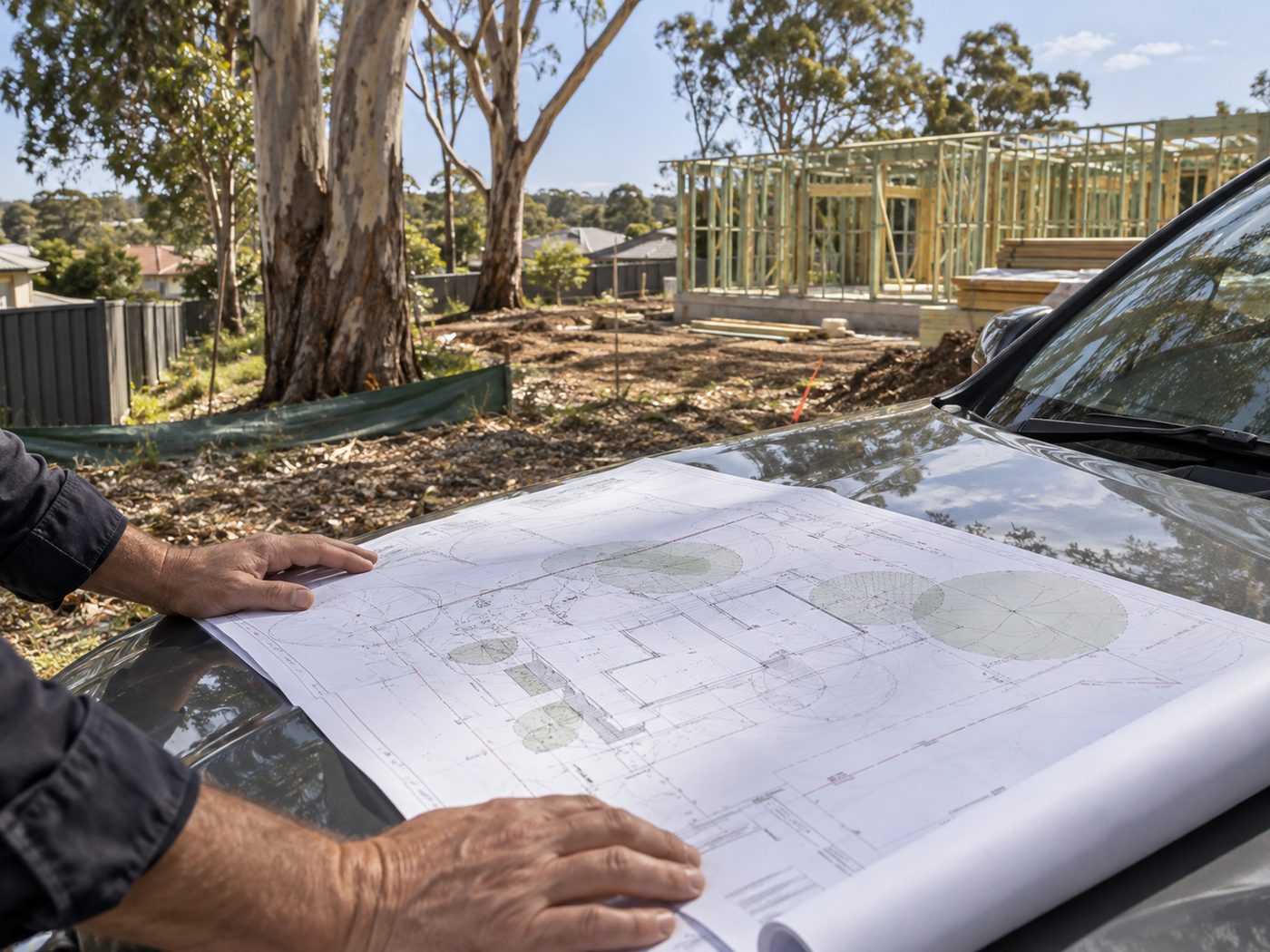
Do I Need an Arborist Report for My Development?
An Arborist Report may be required where:
- Trees are located on or close to the development site
- Neighbouring trees have Tree Protection Zones extending into the property
- Street or Council trees may be affected
- Building footprints occur near existing trees
- Excavation or basement construction may affect roots
- Driveways, retaining walls or services interact with tree protection areas
- Tree removal or significant pruning forms part of the DA
- Council has requested arboricultural information
- The site contains native vegetation that may require biodiversity consideration
If you have received an RFI or Council request for an Arborist Report, send us the correspondence and your latest plans.
Request a free quoteWhat Is an Arboricultural Impact Assessment (AIA)?
An Arboricultural Impact Assessment (AIA) is the primary development-related arboricultural assessment used to evaluate how proposed works may affect existing trees and how suitable trees can be retained and protected.
The completed AIA provides Council with arboricultural information to assess how the proposed development may affect existing trees and what protection or management measures may be required.
A typical AIA includes
- Tree survey and identification
- Tree health and condition assessment
- Structural assessment and Useful Life Expectancy
- Tree retention value
- Tree Protection Zone (TPZ) and Structural Root Zone (SRZ) calculations
- Development impact assessment, including encroachment percentages
- Tree retention recommendations
- Tree removal recommendations
- Tree protection and construction management measures
What Does an AIA for a Penrith Development Typically Address?
Penrith City Council’s Development Control Plan (Part C2, Vegetation Management) requires that development affecting trees be assessed as part of the Development Application, with consideration given to Tree Protection Zones and the retention of existing vegetation wherever possible.
As a general guide, an AIA supporting a Penrith DA typically addresses:
Tree Survey & Root Zone Calculations
Tree identification, condition and Tree Protection Zone (TPZ) and Structural Root Zone (SRZ) calculations for trees on or near the development site.
Development Impact Assessment
Trees proposed for removal or retention, the extent of proposed TPZ and SRZ impacts, and whether proposed encroachment requires further arboricultural assessment, mitigation, tree-sensitive design or Project Arborist involvement.
Biodiversity Considerations
Where native vegetation is present, the arboricultural assessment may identify circumstances requiring separate biodiversity review, including consideration of the Biodiversity Values Map or Biodiversity Offsets Scheme triggers. Where triggered, ecological assessment such as a BDAR must be undertaken by the appropriately accredited biodiversity professional.
Pruning Details Where Applicable
Details of any proposed pruning, with reference to AS 4373-2007, Pruning of Amenity Trees.
Scaled Tree Plans
Tree plans, drawn to scale, showing proposed removal and retention and the relevant protection zones.
Applicable Australian Standards
Penrith City Council’s adopted Development Control Plan references AS 4970-2009, Protection of Trees on Development Sites. Arboricultural documentation should also have regard to the current applicable Australian Standard and Council requirements.
For a detailed explanation of Penrith’s DA tree requirements, root zone rules and development compliance process, read the Penrith Development Tree Compliance Guide
Council information last verified: 30 August 2026. Council requirements can change. This page provides general guidance current as of the date above. For a determination specific to your property, confirm current requirements with Penrith City Council or arrange a site assessment.
When Should I Engage an Arborist?
Ideally before the design is completely finalised. Identifying constraints before architectural and engineering drawings are locked in can reduce redesign and Requests for Further Information later.
- Trees suitable for retention
- Likely root zone constraints
- Building conflicts
- Driveway conflicts
- Excavation impacts
- Potential root investigations
- Likely tree removal
- Tree-sensitive design opportunities
- Whether native vegetation on site may trigger additional biodiversity assessment
Development Projects We Support
Residential
New homes, knockdown rebuilds, duplexes, townhouses, multi-dwelling housing, apartments and subdivisions.
Commercial & Industrial
Commercial buildings, warehouses, industrial facilities, logistics, mixed-use development and industrial subdivisions.
Community & Infrastructure
Childcare centres, schools, community facilities, roads and infrastructure projects.
Rural & Growth Areas
Rural lot development, rezoning proposals and sites affected by the Biodiversity Values Map or bushfire-prone land mapping.
From Development Application to Construction Compliance
Assess
Tree survey, condition, retention value, root zone calculations and development constraints.
Report
Development Arborist Report or AIA prepared against the proposed plans.
Protect
Tree Protection Plan, root investigation and construction protection where required.
Certify
Project Arborist inspections, compliance reporting and certification where required by consent.
Tree Root Investigation Where Design Conflicts Exist
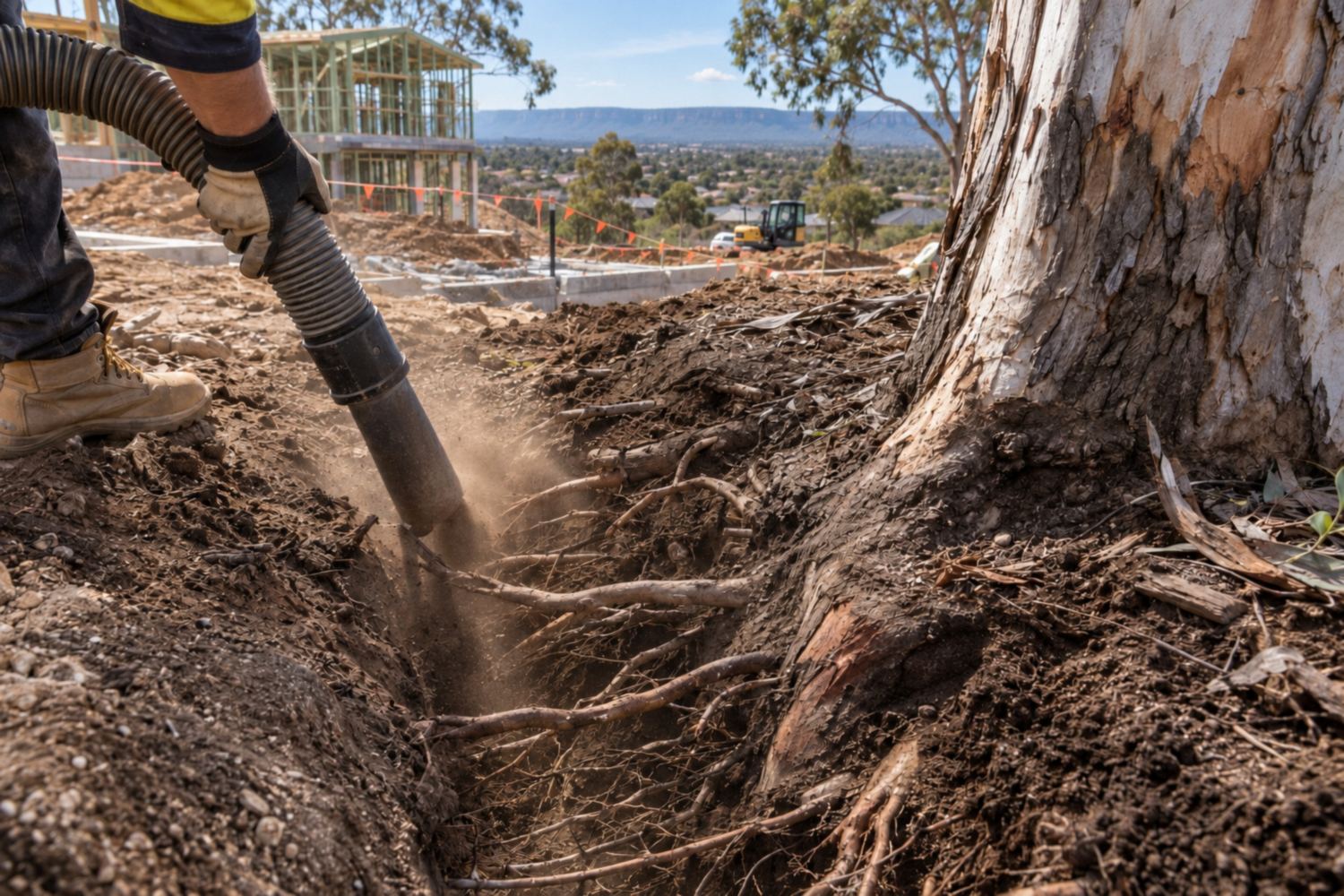
Where proposed excavation or construction enters a sensitive part of a retained tree’s root zone, above-ground assessment may not provide enough information to determine actual root impacts.
Non-destructive root investigation can identify significant roots and provide evidence to assist architects, engineers and Council when assessing design options.
Development Arborist Reports Throughout Penrith
North Ward
Development Arborist Reports and AIAs throughout Agnes Banks, Berkshire Park, Cambridge Gardens, Cambridge Park, Castlereagh, Cranebrook, Emu Heights, parts of Emu Plains, Jordan Springs, parts of Kingswood, Llandilo, Londonderry, parts of Penrith, Werrington, Werrington County and Werrington Downs.
North Ward Arborist ReportsSouth Ward
Development Arborist Reports and AIAs throughout Badgerys Creek, parts of Emu Plains, Glenmore Park, Jamisontown, parts of Kingswood, Leonay, Luddenham, Mulgoa, Orchard Hills, parts of Penrith, Regentville, South Penrith and Wallacia.
South Ward Arborist ReportsEast Ward
Development Arborist Reports and AIAs throughout Caddens, Claremont Meadows, Colyton, Erskine Park, Kemps Creek, parts of Kingswood, Mount Vernon, North St Marys, Orchard Hills, Oxley Park, St Clair and St Marys.
East Ward Arborist ReportsSome Penrith suburbs cross ward boundaries, including parts of Emu Plains, Kingswood, Orchard Hills and Penrith. Ward boundaries do not change the Council-wide tree controls that apply, but your specific ward can be confirmed from your property address.
Why Choose Penrith Tree Permit Services?
AQF Level 5 Consulting Arborists
Development-related arboricultural reporting prepared by AQF Level 5 Consulting Arborists.
AIA and Development Specialists
Council-ready AIAs for residential through to major commercial and infrastructure projects.
Root Investigation
AirSpade investigation and root mapping where required.
Project Arborist Continuity
Tree protection and certification services following approval.
32+ Years’ Experience
Practical consulting and tree-management experience.
Fast-Track Available
Priority report preparation where project scheduling permits.
Frequently Asked Questions
What Council asks for when a Development Application involves trees.
Do I need an Arborist Report for every Penrith Development Application?
No.
An Arborist Report or AIA may be required where proposed works affect existing trees on, adjoining or near the development site.
Is a Development Arborist Report the same as an AIA?
Often, yes.
For many Penrith developments involving trees, the Development Arborist Report is prepared as an Arboricultural Impact Assessment (AIA). An AIA assesses existing trees, their retention value, root zone encroachment, likely development impacts, retention or removal recommendations and the tree protection or management measures required.
Does Penrith Council require AQF Level 5?
Not universally for every Development Application.
Penrith Council’s published vegetation controls refer to a suitably qualified and experienced arborist rather than imposing a universal AQF Level 5 requirement for every Development Application. Specific development consent conditions may impose additional qualification requirements depending on the project. Our development reports are prepared by AQF Level 5 Consulting Arborists.
When should I get the arborist involved?
Ideally before the design is completely finalised.
Early arboricultural assessment can identify tree and root-zone constraints before architectural and engineering drawings are locked in.
Can you work directly with my architect or engineer?
Yes.
We regularly collaborate with architects, builders, engineers, planners, certifiers and developers to integrate tree constraints into project design.
What if Council has requested more arboricultural information?
Send us the RFI or Council correspondence and your current plans.
We can review the request and identify the arboricultural information required.
How much does a Development Arborist Report cost?
Development Arborist Reports and AIAs start from $900.
The final cost depends on the number of trees, project complexity, plans and Council requirements. We provide a fixed quote before work begins.
Need a Development Arborist Report in Penrith?
Planning a new home, duplex, subdivision, commercial development or major project? Send us your architectural plans or Council correspondence. Our AQF Level 5 Consulting Arborists can identify the required arboricultural assessment, prepare Council-ready documentation and assist through the next stages of your development.
Local AQF Level 5 Consulting Arborists32+ Years’ ExperienceFast-Track AvailablePenrith