
Emergency Tree Removal Penrith
AQF Level 5 Emergency Tree Assessments, Imminent-Risk Reports and Emergency Tree Assistance
Fallen tree, storm damage or concerned that a tree may present an immediate danger?
Penrith Tree Permit Services provides emergency tree assessment, an emergency crew for make-safe work, and AQF Level 5 arboricultural documentation throughout the Penrith Local Government Area.
Where a tree has failed or may present an imminent risk, the first priority is assessing the situation, addressing the immediate hazard where appropriate and establishing the correct Council pathway.
Not every damaged or leaning tree meets Penrith Council’s imminent-risk exemption, and not every storm-damaged tree requires complete removal.
Where appropriate, our AQF Level 5 Consulting Arborists can assess the tree and document the arboricultural evidence needed to support the next step.
AssessMake SafeDocumentResolve
AQF Level 5 Consulting ArboristsQTRA & TRAQ Qualified32+ Years’ Experience24/7 Emergency Response
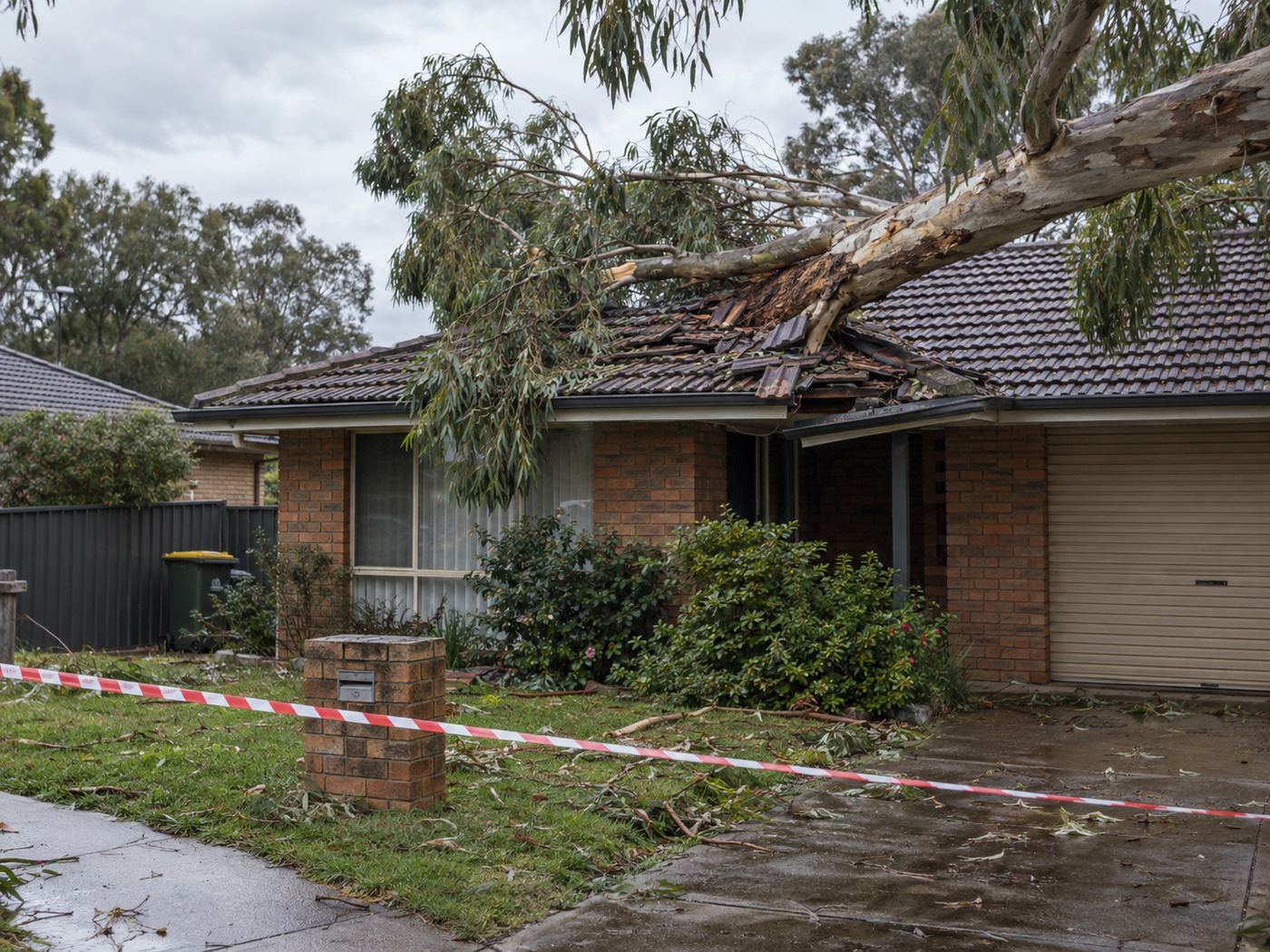
When Does a Tree Need Urgent Assessment?
Tree emergencies can arise suddenly following storms, branch or stem failure, root movement or other significant changes in tree condition.
Urgent assessment may be appropriate for:
These circumstances may require urgent action, but they do not automatically establish that Penrith Council’s imminent-risk exemption applies.
A professional assessment helps determine whether urgent pruning, make-safe work, further investigation, monitoring or complete removal is appropriate.
Penrith Council’s Imminent-Risk Exemption
An imminently dangerous tree may qualify for an exemption from requiring a Vegetation Permit. Penrith City Council’s vegetation controls provide an exemption where a tree, or part of a tree, is assessed as an imminent risk.
Council’s Development Control Plan defines imminent as likely to happen at any moment.
Where a tree or part of a tree is assessed as imminently dangerous by a suitably qualified arborist, a Vegetation Permit is not required to undertake the recommended pruning or removal work necessary to mitigate that danger.
Council’s guidance notes a preference for an AQF Level 5 Consulting Arborist for this assessment. Where the imminent-risk exemption is relied upon, a copy of the Arborist Report should be retained to demonstrate that the exemption requirements were met.
A dangerous-looking tree does not automatically qualify
A tree that is leaning, storm damaged or otherwise concerning does not automatically meet Council’s imminent-risk threshold.
The exemption depends on professional arboricultural assessment of the actual tree, its condition and the circumstances at the time.
Where the situation does not meet the imminent-risk exemption, another Council pathway may apply.
Our Emergency Tree Response Process
Triage
We discuss the situation, review photographs where appropriate and identify the apparent urgency and appropriate initial response.
Attend and assess
Our emergency crew attends to assess the failed, damaged or potentially dangerous tree and surrounding site conditions, including immediate hazards to people, buildings, access and infrastructure.
Make safe
Where appropriate, our emergency crew carries out the urgent work needed to address the immediate hazard and make the situation safe.
Document
Photographs, observations and arboricultural evidence are recorded where Council, insurance or other documentation may be required.
Resolve
We establish whether further pruning, removal, investigation, monitoring or a Vegetation Permit is required.
Not every storm-damaged tree requires removal. Where appropriate, assessment may identify pruning, further investigation or monitoring as an alternative.
Request emergency helpWhat Do We Assess After Tree Failure or Storm Damage?
Emergency tree assessment considers the actual failure or defect together with the surrounding targets and site circumstances.
Depending on the situation, our AQF Level 5 Consulting Arborists can assess:
- Structural stability
- Branch, stem or union failure
- Split or damaged stems
- Root plate movement or root failure
- Uprooting or partial failure
- Hanging or suspended branches
- Storm-related structural damage
- Secondary defects following an initial failure
- Risk to people
- Risk to buildings and property
- Risk to infrastructure and access
- Immediate management requirements
Where emergency removal or pruning is considered appropriate, the arboricultural evidence can document the reasons supporting that recommendation.
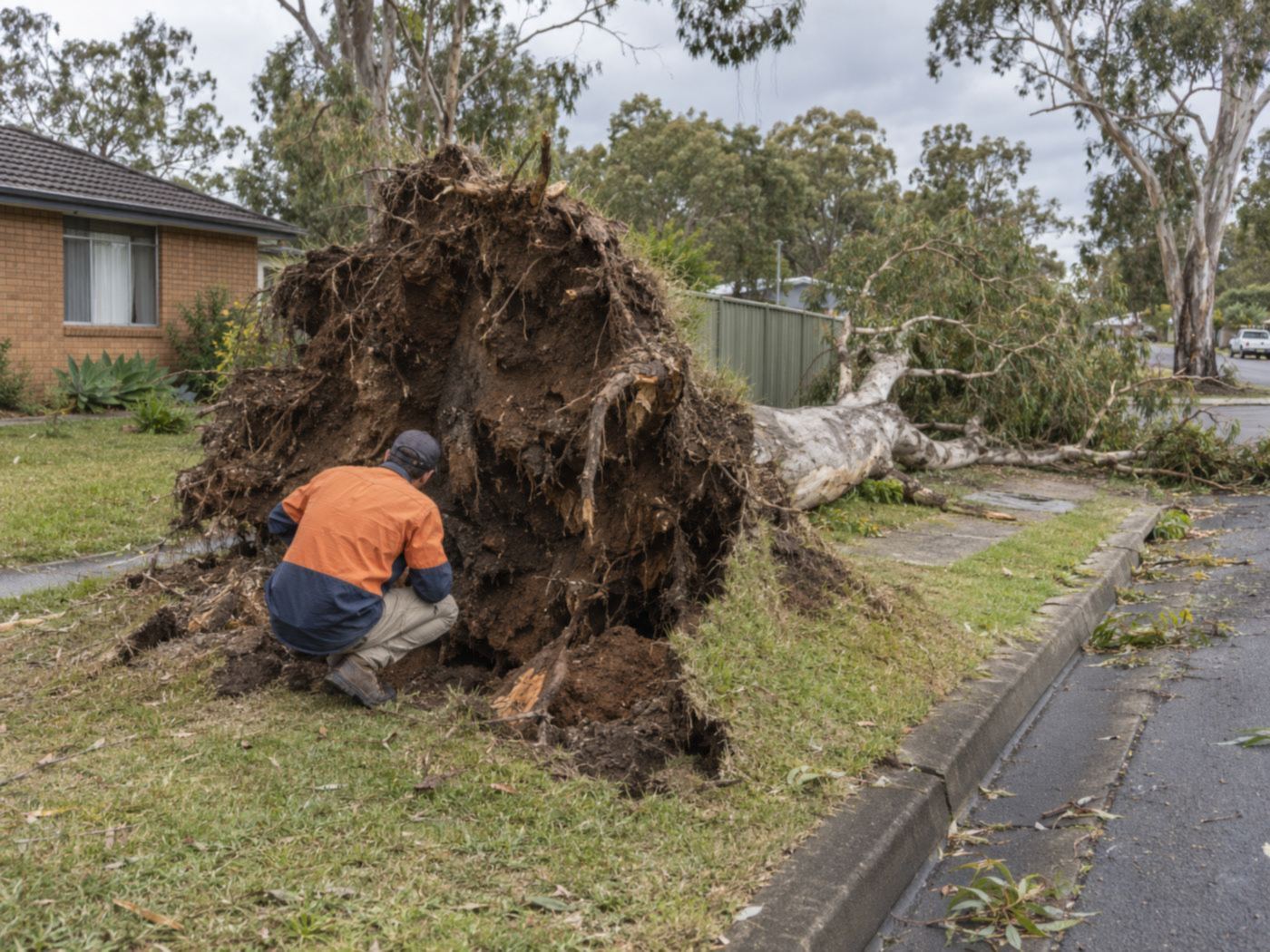
Emergency, Council and Insurance Arborist Reports
Following a serious tree failure or storm event, documenting the tree’s condition before or during emergency work can be important.
Once failed branches are removed, a tree is dismantled or other make-safe work occurs, some of the original evidence may no longer be available in its original condition.
Depending on the circumstances, emergency arboricultural documentation may include:
- Tree identification
- Photographs of the failure
- Tree health and structural condition
- Observable structural defects
- Root plate movement
- Failed branches or stems
- Damage to surrounding property
- Immediate hazards
- Make-safe work undertaken
- Recommended further management
Our AQF Level 5 Consulting Arborists can prepare arboricultural documentation where required for matters involving:
Where safe to do so, photographs taken before emergency work begins can provide useful supporting evidence of the original circumstances.
Council information last verified: 30 August 2026. Council requirements can change. This page provides general guidance current as of the date above. For a determination specific to your property, confirm current requirements with Penrith City Council or arrange a site assessment.
Does Every Storm-Damaged Tree Need to Be Removed?
No. Storm damage can range from relatively minor branch failure to major stem or root-system failure.
The appropriate response depends on the extent and location of the damage, the remaining structure of the tree, surrounding targets and whether the tree remains suitable for retention.
Depending on the circumstances, management may involve:
- Removal of failed or damaged branches
- Further structural assessment
- Additional investigation
- Monitoring
- Complete tree removal
The objective is to address the immediate hazard while determining the appropriate longer-term management of the tree.
Emergency Tree Assistance Throughout the Penrith LGA
We provide emergency tree assessment and arboricultural support throughout Penrith’s North, South and East Wards.
Emergency matters can involve storm-damaged trees in established residential areas, large tree failures on rural properties, trees affecting buildings, vehicles and access, and urgent tree issues on development and commercial sites.
Relevant Penrith Emergency Tree Case Studies
Real emergency tree matters provide useful examples of how tree failure, storm damage, structural condition and Penrith Council’s imminent-risk provisions can affect the appropriate response.
Our emergency tree case studies cover relevant matters such as:
Why Choose Penrith Tree Permit Services?
AQF Level 5 Consulting Arborists
Professional arboricultural assessment and Council-ready documentation where required.
Emergency Assessment First
Not every damaged tree requires complete removal and not every concerning tree meets Council’s imminent-risk exemption. We assess the actual circumstances first.
Dedicated Emergency Crew
An emergency crew attends for make-safe work once the situation has been assessed.
QTRA & TRAQ Qualified
Recognised tree-risk assessment methodologies available where formal risk assessment is appropriate.
32+ Years’ Experience
Practical experience across tree assessment, structural condition, tree failure, risk and tree management.
Council-Ready Emergency Documentation
Arboricultural evidence for Council enquiries, imminent-risk matters and other situations requiring documentation.
Development Emergency Support
Arboricultural assessment where tree failures or urgent tree issues affect active development and construction sites.
24/7 Emergency Response
Emergency assistance available outside normal business hours, subject to weather conditions and safe site access.
Related Arboricultural Services
Tree Removal Penrith
Tree assessment, AQF Level 5 reporting and Vegetation Permit guidance.
Tree Removal PenrithTree Health & Safety Assessments
Detailed assessment of tree health, structural condition and risk for concerning trees that are not an immediate emergency.
Tree Health & Safety Assessments PenrithTree Root Investigation & Mapping
Non-destructive root investigation where root condition, movement or property conflicts require further evidence.
Tree Root Investigation & Mapping PenrithDevelopment Arborist Reports
AQF Level 5 arboricultural assessment where an emergency tree issue affects a Development Application or development site.
Development Arborist Reports PenrithFrequently Asked Questions
What to do first when a tree has failed, and who is responsible.
Can I remove a dangerous tree immediately?
Only where the circumstances satisfy the applicable exemption or other lawful pathway.
Penrith City Council provides an exemption where a tree or part of a tree has been assessed as imminently dangerous by a suitably qualified arborist. A tree being damaged, leaning or concerning does not automatically mean the imminent-risk exemption applies. Where it is safe to do so, obtain professional arboricultural assessment before removal or pruning if there is uncertainty about whether the exemption applies.
Does a leaning tree automatically qualify as an imminent risk?
No.
A leaning tree does not automatically satisfy Penrith Council’s imminent-risk exemption simply because it appears concerning. The actual condition of the tree and the circumstances need to be professionally assessed to determine whether the imminent-risk provisions apply.
Do I need a Vegetation Permit for an imminently dangerous tree?
Not where the tree satisfies Council’s imminent-risk exemption.
Where a tree or part of a tree is assessed as imminently dangerous by a suitably qualified arborist in accordance with Council’s exemption provisions, a Vegetation Permit is not required for the recommended pruning or removal work necessary to mitigate the danger. A copy of the Arborist Report should be retained where this exemption is relied upon.
Who attends to make the tree safe?
Our emergency crew, once the situation has been triaged.
They carry out the urgent work needed to address the immediate hazard where appropriate.
Should I take photographs before emergency tree work?
Yes, wherever it is safe to do so.
Photographs can provide useful supporting evidence of the tree’s condition, the failure and surrounding circumstances before emergency work changes the original condition. Where Council’s imminent-risk exemption is relied upon, the Arborist Report should also be retained.
Can you prepare an insurance arborist report?
Yes.
We can prepare arboricultural documentation that assists property owners, insurers and other stakeholders in understanding the tree’s condition and the circumstances following a tree failure or emergency event.
Does every storm-damaged tree need to be removed?
No.
Depending on the extent of damage and remaining tree condition, appropriate management may involve pruning, further assessment, monitoring or complete removal.
Do emergency reports need an AQF Level 5 Arborist?
Not every emergency assessment strictly requires one.
Penrith Council’s guidance notes a preference for an AQF Level 5 Consulting Arborist where an assessment is relied upon to support its imminent-risk exemption. Our emergency Arborist Reports are prepared by AQF Level 5 Consulting Arborists as standard.
Do you provide emergency assistance outside business hours?
Yes.
Emergency assistance is available 24 hours a day, seven days a week, subject to weather conditions and safe site access.
Need Emergency Tree Assistance in Penrith?
If a tree has fallen, suffered storm damage or may present an immediate danger, the first step is establishing the condition of the tree, addressing the immediate hazard where appropriate and determining the correct next step.
Send photographs where it is safe to do so, together with the property address and a brief description of what has occurred.
AQF Level 5 Consulting ArboristsQTRA & TRAQ Qualified32+ Years’ Experience24/7 Emergency Response