
Arborist Reports DA & Tree Removal - Penrith, Glenmore Park & Mulgoa
AQF Level 5 Arborist Reports for Development Applications & Tree Removal
Need an Arborist Report in Penrith’s South Ward?
Penrith Tree Permit Services provides AQF Level 5 arboricultural assessments and Council-ready reports throughout South Ward, from established residential areas around Penrith, South Penrith and Jamisontown to Glenmore Park, the Nepean-side suburbs of Leonay, Emu Plains and Regentville, and the rural landscapes around Mulgoa, Wallacia and Luddenham.
South Ward contains very different development and vegetation settings. A residential redevelopment in South Penrith can raise different tree issues from construction in Glenmore Park, development near established trees in Leonay, or vegetation management on a larger rural property around Mulgoa or Wallacia.
The Council-wide tree controls remain the same, but the site, vegetation and development context can change considerably.
Not every tree needs a full Arborist Report. We assess what is proposed, identify the relevant pathway and determine what arboricultural evidence is actually required.
Request an assessmentAQF Level 5 Consulting ArboristsTRAQ & QTRA Qualified32+ Years’ Arboricultural Experience
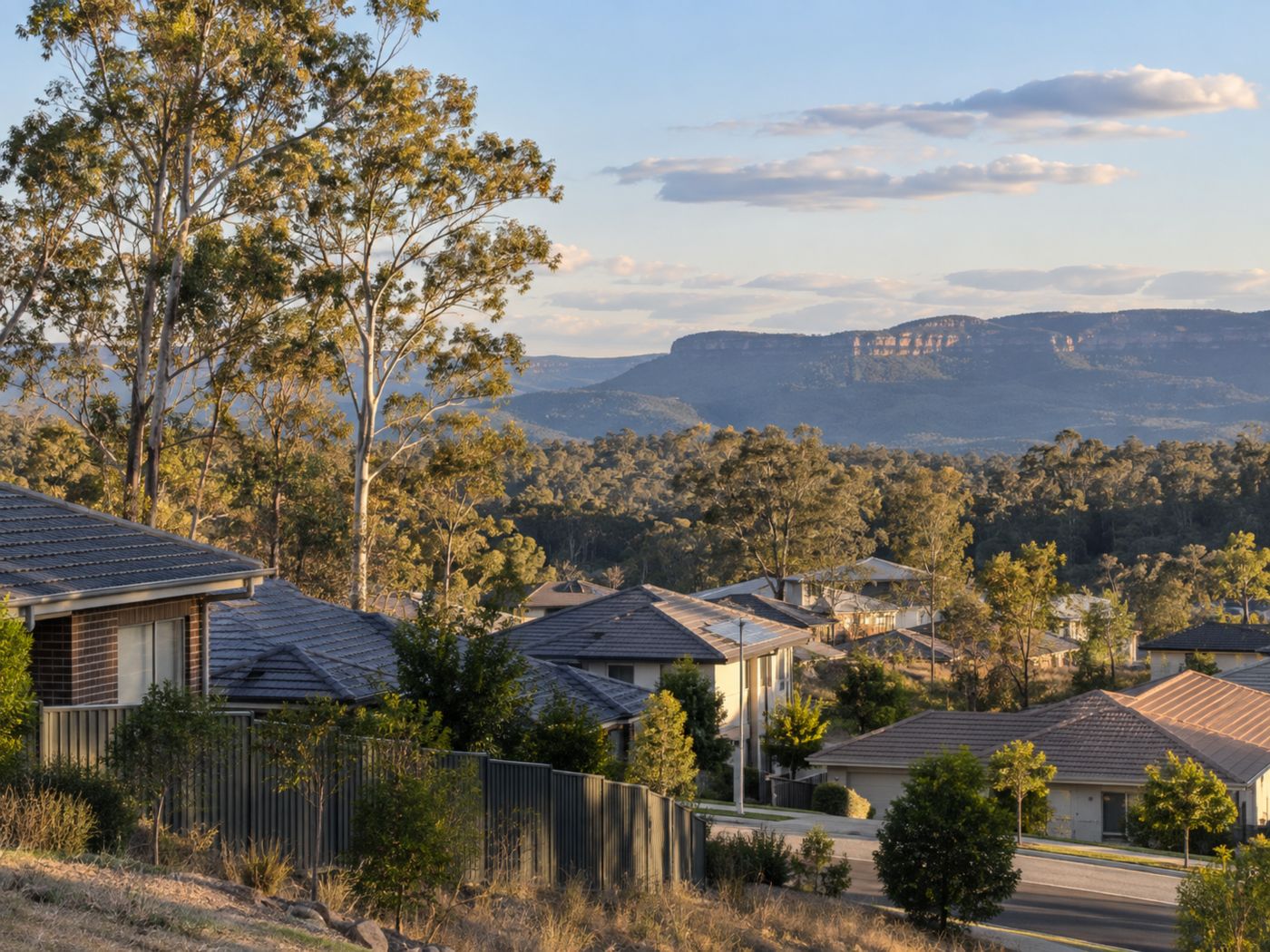
Arboricultural Issues Vary Across South Ward
South Ward stretches from established urban Penrith through newer development areas and the Nepean River corridor to some of the LGA’s most distinctive rural landscapes. That makes local site context particularly important.
Established urban areas: Penrith, South Penrith, Jamisontown, Kingswood
Established residential properties can contain mature trees in increasingly constrained relationships with houses, driveways, retaining structures, services and neighbouring development.
For alterations, additions, secondary dwellings, knockdown-rebuilds and other development, the important question is often how the proposed design interacts with existing trees. Where a retained tree may be affected, an Arboricultural Impact Assessment can establish Tree Protection Zones and Structural Root Zones, assess encroachment and provide arboricultural information to assist the design and Development Application process.
Parts of Penrith and Kingswood fall within South Ward, with other parts located in adjoining wards.
Glenmore Park: established development and growth
Glenmore Park has been developed in stages under Penrith’s Development Control Plan. Stage 1 around the town centre, Stage 2 to the south-west, and Stage 3, a more recently approved release area rezoned in 2022 and still being built out. Which stage a property falls within can be relevant to the site’s planning controls and surrounding context.
For arboricultural assessment, the practical issue is the relationship between proposed development, existing trees and the landscape established through earlier stages of the suburb. Where development is proposed close to retained trees, early assessment can identify potential root-zone conflicts before building footprints, access, excavation or services are finalised.
On projects where trees are required to remain, the arboricultural process can continue beyond the DA through Tree Protection Plans and Project Arborist involvement where required.
Nepean-side areas: Leonay, Emu Plains and Regentville
Leonay, parts of Emu Plains and Regentville occupy a different physical setting from South Penrith and Glenmore Park. Properties can involve established vegetation, varied topography and proximity to the broader Nepean landscape.
Tree assessment in these areas can therefore involve more than simply measuring the distance between a trunk and a proposed building. Root zones, changes in level, retaining structures, access and the relationship between mature vegetation and proposed works may all need to be considered.
Parts of Emu Plains fall within South Ward and parts within North Ward.
Orchard Hills: changing development context
Orchard Hills is particularly important because it is not simply another established residential suburb. Part of the area, Orchard Hills North, has already been rezoned for new housing, and the broader precinct is subject to a separate, ongoing state-led rezoning process around the future Orchard Hills Metro Station, run by the NSW Department of Planning.
For properties containing established trees, early arboricultural assessment can be valuable where future development, subdivision, access or infrastructure may interact with existing vegetation. The objective is to identify important tree constraints early enough for them to inform planning and design rather than trying to resolve avoidable conflicts after plans have been completed.
Orchard Hills extends across South and East Ward areas.
Mulgoa and Wallacia: rural landscape and established tree cover
Mulgoa and Wallacia are fundamentally different from the urban parts of South Ward. Properties can contain larger areas of established vegetation, mature trees, rural landscapes, creek corridors and vegetation that contributes to the broader character of the Mulgoa Valley.
Tree and vegetation issues on these properties can therefore extend beyond assessment of a single residential tree. Where development, clearing, access or other works are proposed, the first task is establishing what vegetation is present, what is proposed and which planning or approval pathway applies.
On larger sites, biodiversity, riparian, heritage or other environmental considerations may also be relevant depending on the property and proposed works.
Luddenham and Badgerys Creek: rural land in transition
Luddenham and Badgerys Creek sit within the Western Sydney Aerotropolis, the planning area surrounding the new Western Sydney International Airport, subject to a major, long-running State rezoning and precinct-planning process.
Existing properties can still have rural characteristics, substantial vegetation and larger land areas, while planning controls and future land-use considerations may be more complex than on a conventional suburban residential lot and can differ significantly depending on which Aerotropolis precinct a property falls within.
For tree-related development work, it is therefore important not to assume that the standard individual-tree pathway is the only consideration. The property, applicable planning controls, vegetation and proposed development should be established before deciding what arboricultural assessment or documentation is required.
South Ward Suburbs We Service
Parts of Emu Plains, Kingswood and Penrith fall within South Ward. Orchard Hills extends across South and East Ward areas.
Ward boundaries do not change Penrith Council’s City-wide tree controls. Where a property sits near a ward boundary, its ward can be confirmed from the address.
Penrith Council Tree Controls Apply Across South Ward
South Ward does not have its own tree-removal rules. Penrith Council’s City-wide vegetation management controls apply across the ward.
For Council’s tree controls, a tree generally includes a living perennial plant that is 3.5 metres or more in height, or has a trunk diameter exceeding 100mm measured 1.4 metres above ground level.
Controls can also extend to prescribed native vegetation, environmentally sensitive land, heritage vegetation and formally recognised significant vegetation. That broader vegetation context can be particularly important on South Ward’s rural and semi-rural properties, where the issue may involve more than one individual tree.
Council information last verified: 30 August 2026. Council requirements can change. This page provides general guidance current as of the date above. For a determination specific to your property, confirm current requirements with Penrith City Council or arrange a site assessment.
Development Application or Vegetation Permit?
The reason for the proposed tree work determines the pathway.
Where tree removal or impacts are required to facilitate a proposed development, the tree issue is generally assessed through the Development Application.
For private tree removal or pruning unrelated to a DA, a Vegetation Permit may instead be required unless an applicable exemption can be established.
This distinction is particularly important where a property owner is planning development. Removing a tree separately before lodging a DA is not necessarily the correct approach simply because the tree appears to qualify for private-tree removal. Where development is proposed, establish the planning and arboricultural position first.
Development Around Existing Trees
South Ward contains everything from constrained residential lots to large rural properties, but the basic arboricultural question remains the same: what effect will the proposed development have on the tree, and what effect will retaining the tree have on the development?
An AIA may be required to assess:
- Tree Protection Zones
- Structural Root Zones
- Proposed encroachment
- Excavation and changes in level
- Driveways and access
- Retaining structures
- Underground services
- Neighbouring trees
- Tree retention or removal
- Protection requirements during construction
Where the root location itself becomes important, non-destructive root investigation can provide evidence rather than relying solely on calculated protection zones.
Why Choose Penrith Tree Permit Services?
AQF Level 5 Consulting Arborists
Council-ready arboricultural assessment and reporting.
Development Specialists
AIAs, Tree Protection Plans, root investigation and Project Arborist services.
32+ Years’ Experience
Assessment across residential, development, rural and semi-rural sites.
Evidence-Based Assessment
Tree condition, development impacts and root conflicts assessed on their actual circumstances.
Local Penrith Knowledge
We identify the appropriate pathway for the property rather than applying the same answer to every South Ward site.
Frequently Asked Questions
Questions we are asked about trees across South Ward.
Are tree rules different in Mulgoa and South Penrith?
The core controls are the same, the site circumstances are not.
South Penrith commonly involves established residential properties, while a Mulgoa property may involve larger land areas, multiple trees, native vegetation or additional environmental and landscape considerations.
Do I need an Arborist Report for a Glenmore Park DA?
Not every Development Application automatically requires one.
Where existing or neighbouring trees may be affected by the proposal, arboricultural assessment may be required to establish tree impacts, retention requirements and appropriate protection.
Can I remove a tree before submitting my DA?
Generally, no, not separately.
Where removal is intended to facilitate the proposed development, the tree should generally be considered as part of the Development Application. Establish the correct pathway before carrying out removal.
What if roots are affecting my driveway, pipes or building?
The cause should be established, not assumed.
Depending on the issue, evidence may involve arboricultural assessment together with investigation by other appropriate professionals. Where root location is important, non-destructive investigation can help identify the roots involved and their relationship to the tree and affected structure.
Are rural properties around Mulgoa and Wallacia treated differently?
The controls are the same, the vegetation context can be very different.
Larger rural properties can involve native vegetation, groups of trees and other planning or environmental considerations beyond a standard application concerning one residential tree.
What happens to retained trees during construction?
Consent conditions may require tree-protection measures.
This applies where trees are approved for retention. Depending on the project, it can involve a Tree Protection Plan, protection fencing, arborist inspections and Project Arborist supervision during relevant construction activities.
Need an Arborist in Penrith South Ward?
Whether you are preparing a Development Application in Glenmore Park, assessing trees around an established property in South Penrith, investigating tree roots near development in Leonay, or dealing with vegetation on a larger property around Mulgoa, Wallacia or Luddenham, the first step is identifying the correct pathway for the site.
AQF Level 5 Consulting ArboristsTRAQ & QTRA Qualified32+ Years’ Arboricultural Experience